CVE-2026-3502 turns TrueConf updates into a KEV-listed malware channel

CVE-2026-3502 turns TrueConf updates into a KEV-listed malware channel
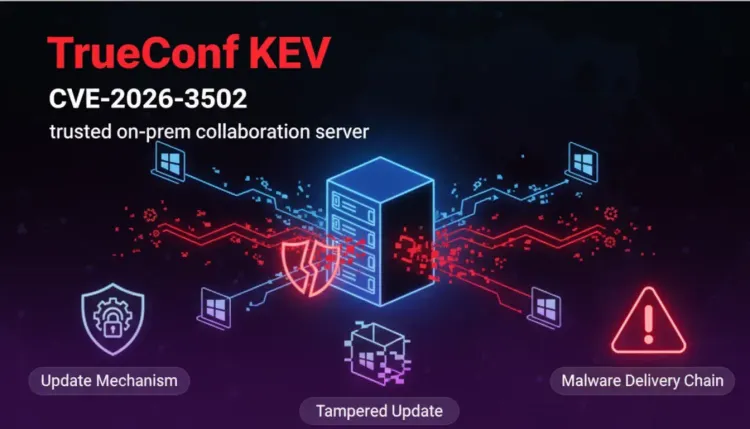
CVE-2026-3502 is the kind of vulnerability defenders should pay attention to even if TrueConf is not a household name inside their environment. On April 2, CISA added the flaw to its Known Exploited Vulnerabilities (KEV) catalog after evidence of active exploitation. That move matters because the bug does not just expose a single endpoint. It lets an attacker who controls a trusted on-premises TrueConf server turn the product’s normal update process into a malware delivery channel for connected Windows clients.
That makes the real story less about video conferencing and more about trust collapse. When a centrally managed collaboration platform distributes updates without validating integrity and authenticity strongly enough, the update path itself becomes part of the enterprise attack surface. In the observed attacks, that trust boundary was weaponized against government targets in Southeast Asia.
What happened
CISA’s KEV notice is brief, but the implication is clear: CVE-2026-3502 is being exploited in the wild. Check Point Research says the flaw sits in the TrueConf client update flow. If the server advertises a newer client version, users are prompted to install an update served by the on-prem TrueConf server. According to Check Point, the client did not sufficiently verify the integrity or authenticity of that package, so a malicious executable could be delivered under the guise of a legitimate update.
In the campaign Check Point tracks as Operation TrueChaos, the attacker allegedly abused a compromised or controlled government TrueConf server to distribute weaponized updates to multiple connected agencies. Instead of needing to breach each endpoint individually, the attacker reused the trusted software distribution channel already present in the target environment.
That is why this issue deserves more attention than the CVSS score alone might suggest. The technical flaw is “download of code without integrity check,” but operationally it behaves much closer to a one-to-many compromise path.
Why defenders should care
The most important lesson here is that on-prem collaboration tools can become internal supply-chain risk. Security teams often monitor internet-facing services, email, identity systems, and VPNs closely, but may give less scrutiny to internal update relationships once software is deployed. CVE-2026-3502 shows why that is dangerous.
A central server trusted by many clients can act as a forced multiplier for attacker access. In Check Point’s reporting, the malicious package reportedly used DLL sideloading, reconnaissance commands, persistence mechanisms, and follow-on payload retrieval tied to Havoc infrastructure. Even if many organizations never become espionage targets, the defensive takeaway is broader: if a management or collaboration product can push executable content to endpoints, it deserves the same scrutiny as any other high-trust software distribution system.
Affected versions and fix status
Public reporting says the issue affects TrueConf versions 8.1.0 through 8.5.2. Following responsible disclosure, TrueConf released fixes in version 8.5.3. The vendor’s 8.5.3 release notes published on April 1 mention “Security updates for March 2026,” which aligns with the remediation window documented by external reporting.
If you operate a self-hosted TrueConf deployment, the practical guidance is simple: treat this as urgent patching, not routine maintenance.
Immediate actions to take
🔴 Upgrade TrueConf clients and review server versions
- Identify all TrueConf clients in your environment, especially Windows endpoints.
- Upgrade affected deployments to TrueConf 8.5.3 or later.
- Confirm that the on-prem server is not still distributing older client packages.
🔴 Treat the TrueConf server as a high-trust asset
- Review who can administer the TrueConf server and who can modify files served as client updates.
- Restrict access tightly and audit recent administrative activity.
- If the platform is not required, consider temporarily reducing exposure until patching is complete.
🟠 Hunt for signs of malicious update activity
Check Point highlighted several artifacts defenders should care about, including:
- suspicious
poweriso.exeor7z-x64.dllfiles, - unexpected
update.7zarchives, iscsiexe.dllartifacts linked to privilege escalation and persistence,- network communication toward suspicious external infrastructure after a client update event.
These are useful anchors for incident response and endpoint triage if you suspect a vulnerable server may have been abused.
🟠 Review lateral exposure inside trusted networks
Because this issue relies on an attacker abusing a trusted central server, segmentation still matters. Limit which endpoints can talk to collaboration and management servers, and use network segmentation to reduce the blast radius if one internal platform is compromised.
🟠 Re-evaluate update trust assumptions
This is also a process problem. Products that distribute executable updates inside private environments should be reviewed for package signing, integrity validation, tamper resistance, and monitoring coverage. If those controls are missing or weak, the software update channel is effectively a privileged execution path.
Strategic takeaway
CVE-2026-3502 is a reminder that internal software distribution is not automatically safer just because it happens on-premises. In some environments, it can be more dangerous precisely because the trust relationship is stronger and less scrutinized. Once CISA adds a flaw like this to KEV, the debate is basically over: exploitation is real, and patching can no longer wait behind more familiar edge-facing issues.
For defenders, the priority is clear: patch TrueConf to 8.5.3, verify who controls the server-side update path, hunt for suspicious update-related artifacts, and treat collaboration infrastructure as part of the privileged software supply chain rather than as a low-risk internal service.
References
FAQ
Written by
Lucas Oliveira
Research
A DevOps engineer and cybersecurity enthusiast with a passion for uncovering the latest in zero-day exploits, automation, and emerging tech. I write to share real-world insights from the trenches of IT and security, aiming to make complex topics more accessible and actionable. Whether I’m building tools, tracking threat actors, or experimenting with AI workflows, I’m always exploring new ways to stay one step ahead in today’s fast-moving digital landscape.
Hot TopicsLast 7 days
Categories
Stay Updated
Get the latest cybersecurity insights delivered to your inbox.