European Commission breach shows how stolen cloud secrets can spill across shared public platforms

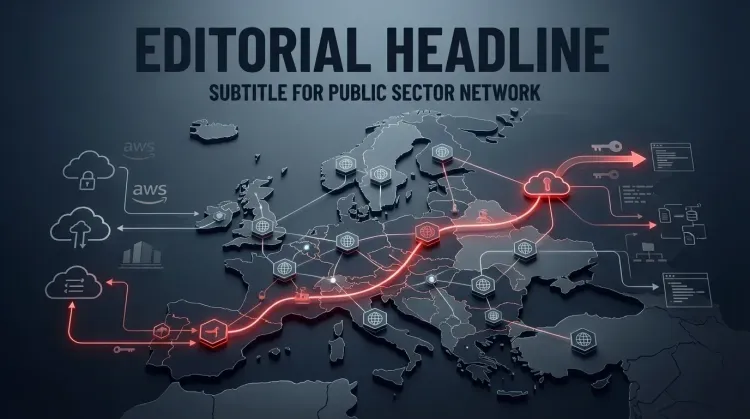
European Commission breach shows how stolen cloud secrets can spill across shared public platforms
The latest details on the European Commission cloud incident make the case more important than a standard breach disclosure. According to CERT-EU, the compromise was linked with high confidence to the Trivy supply-chain compromise attributed to TeamPCP, and the downstream impact appears to have reached far beyond a single victim environment.
That matters because this was not just a website defacement or isolated account issue. CERT-EU says the affected AWS environment supported websites for up to 71 clients of the Europa web hosting service, including 42 internal European Commission clients and at least 29 other Union entities. In other words, one cloud compromise appears to have created a broad public-sector data breach problem across a shared service platform.
What happened
CERT-EU says the European Commission’s Cybersecurity Operations Centre detected suspicious Amazon API activity, potential account compromise, and abnormal network traffic on March 24. The Commission notified CERT-EU on March 25 and publicly disclosed the incident on March 27.
The investigation found that attackers obtained an AWS secret through the Trivy supply-chain compromise and used it to access the affected Commission cloud environment. Once inside, the intruders reportedly used TruffleHog to hunt for more secrets, created and attached a new access key to an existing user to reduce the chance of detection, and then conducted reconnaissance and exfiltration.
This sequence matters because it shows how a software supply-chain issue can become a cloud identity problem very quickly. Once stolen secrets reach an attacker, the priority shifts from package integrity alone to credential containment, blast-radius control, and incident response.
Why this breach stands out
The most important lesson is architectural. The affected environment was part of the technical infrastructure that supported multiple websites and clients. That makes the incident a shared-platform risk story, not just a single-account compromise.
CERT-EU says about 91.7 GB compressed of data was exfiltrated, roughly 340 GB uncompressed. Public reporting says the leaked material included names, surnames, usernames, email addresses, and large volumes of outbound email-related files. CERT-EU also said the data extortion group ShinyHunters later published the stolen archive on its dark web leak site.
From a defender perspective, this is the practical danger of cloud secret theft:
- the attacker may not need malware on endpoints to cause damage
- administrative access can be abused quietly through legitimate APIs
- one compromised trust path can affect multiple downstream tenants or clients
- exfiltration can happen before defenders understand the true scope of exposure
Why teams should pay attention even if they are not in government
The European Commission case is a public reminder of a broader pattern. Many organizations now run shared web, data, and application services on cloud infrastructure with automation pipelines, secrets, and cross-account permissions layered together. That model is efficient, but it also means that a compromise in one part of the software delivery chain can become a cloud governance failure if access control and secret hygiene are not tight.
If your environment uses scanners, build tools, package registries, or CI/CD helpers with elevated cloud visibility, this incident should prompt a hard look at:
- where secrets are exposed during automation
- how quickly compromised keys can be revoked
- whether workloads are over-permissioned
- whether shared service platforms are isolated strongly enough from one another
What defenders should do now
🔴 Review software supply-chain exposure
- Identify whether affected or similarly compromised tooling touched cloud environments in your build or deployment paths.
- Verify package integrity, update provenance checks, and review recent dependency changes in CI/CD systems.
- Treat any exposed cloud secret found in automation paths as potentially compromised until proven otherwise.
🔴 Audit cloud identities and secrets
- Rotate keys, tokens, and long-lived credentials that may have been reachable from build systems.
- Look for unusual key creation, token issuance, role assumption, and API activity.
- Reduce standing permissions for automation accounts wherever possible.
🟠 Reassess shared-platform segmentation
- Separate customer, client, or business-unit workloads so one cloud account issue does not create broad cross-tenant impact.
- Use stronger network segmentation and account boundary controls for administrative services.
- Limit which services can reach high-value data stores and notification systems.
🟠 Prepare for extortion follow-on activity
- If data was exposed, assume extortion, leak-site pressure, and secondary fraud attempts may follow.
- Coordinate legal, communications, privacy, and technical response functions early.
- Preserve logs and cloud audit trails before retention windows close.
Strategic takeaway
The European Commission breach is a strong example of how modern cloud incidents spread through trust relationships rather than noisy exploitation alone. A compromised package or pipeline can lead to stolen secrets, which can lead to legitimate-looking API abuse, which can lead to exfiltration across a shared platform before defenders fully understand the blast radius.
That is why supply-chain defense cannot stop at package scanning. Teams need tighter cloud identity controls, faster secret rotation, and stronger separation between shared-service clients. When automation has broad reach, a single stolen credential can become an organization-wide — or multi-organization — problem.
References
FAQ
Written by
Lucas Oliveira
Research
A DevOps engineer and cybersecurity enthusiast with a passion for uncovering the latest in zero-day exploits, automation, and emerging tech. I write to share real-world insights from the trenches of IT and security, aiming to make complex topics more accessible and actionable. Whether I’m building tools, tracking threat actors, or experimenting with AI workflows, I’m always exploring new ways to stay one step ahead in today’s fast-moving digital landscape.
Hot TopicsLast 7 days
Categories
Stay Updated
Get the latest cybersecurity insights delivered to your inbox.